Wednesday, May 6, 2026

A Publication For Loan Officers

The Elite Officer

Vol. 1

Section

Break

Activate 2026

Activate 2026: Three Tracks, One Private Lending Ecosystem

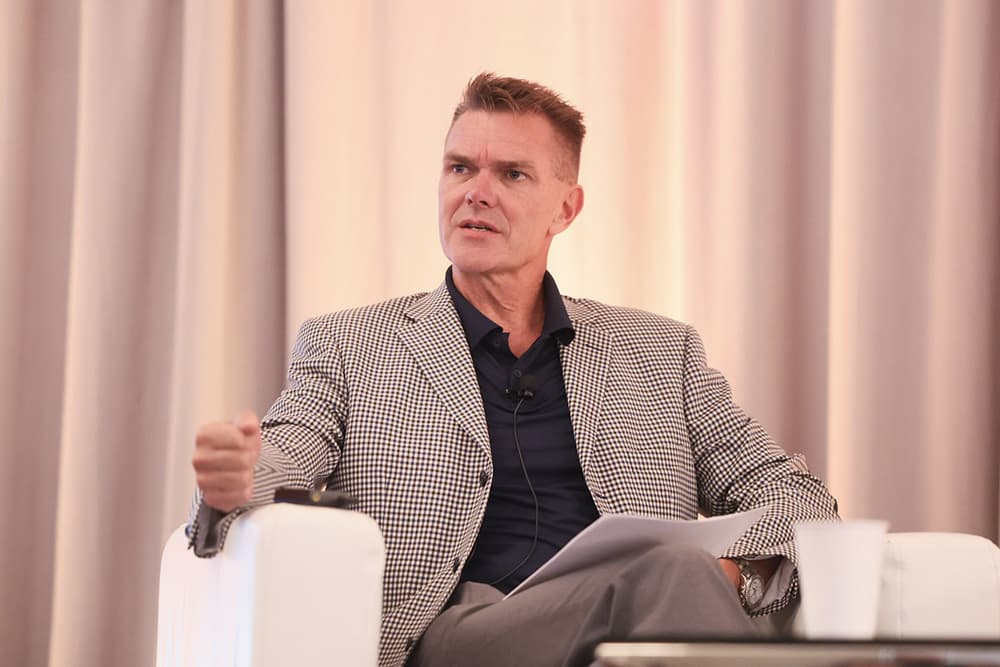
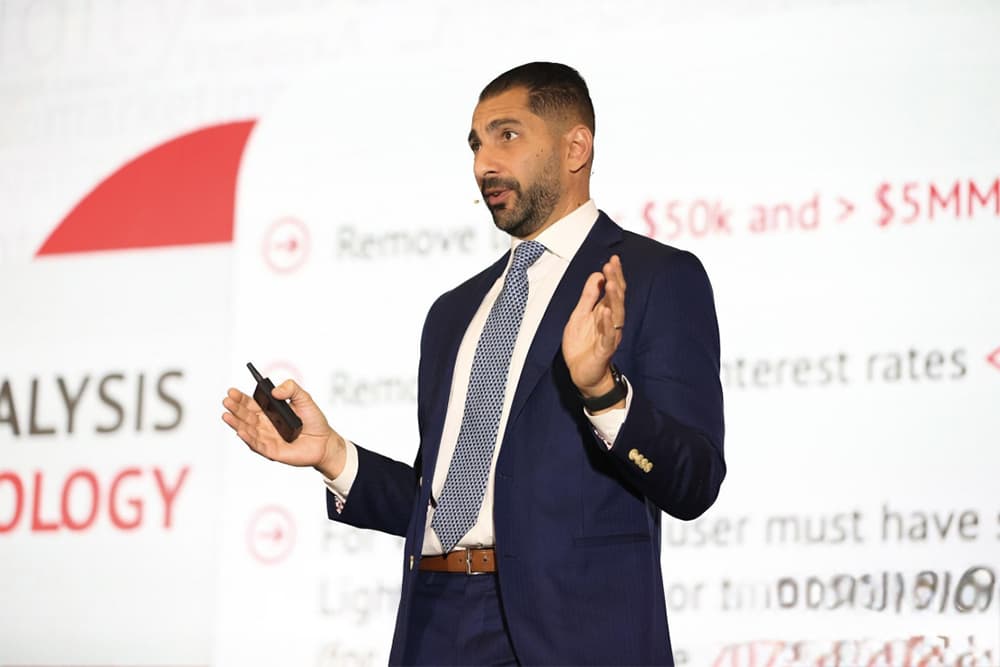
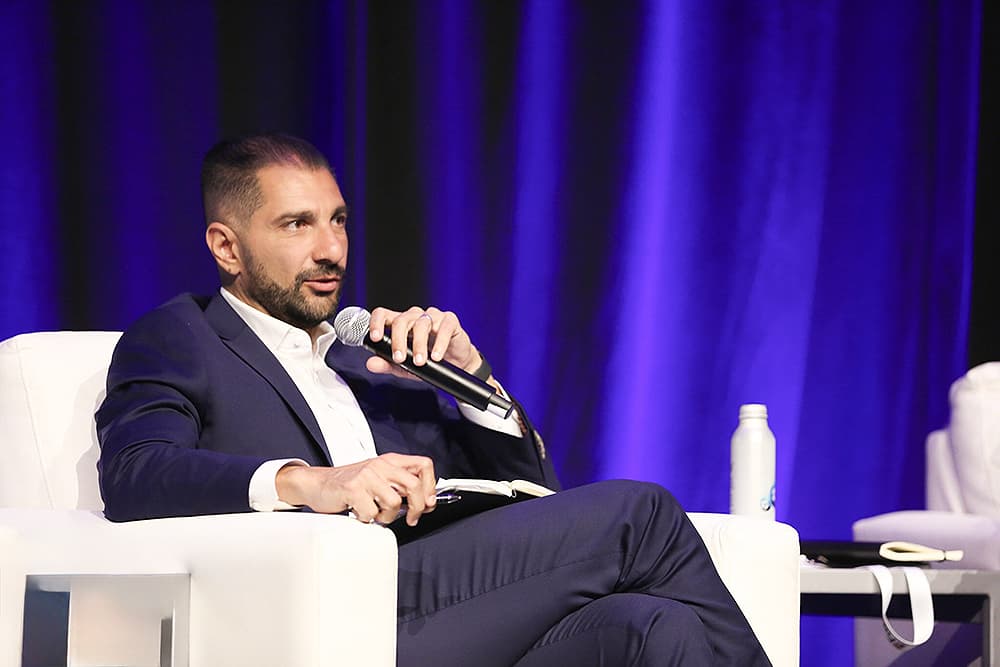
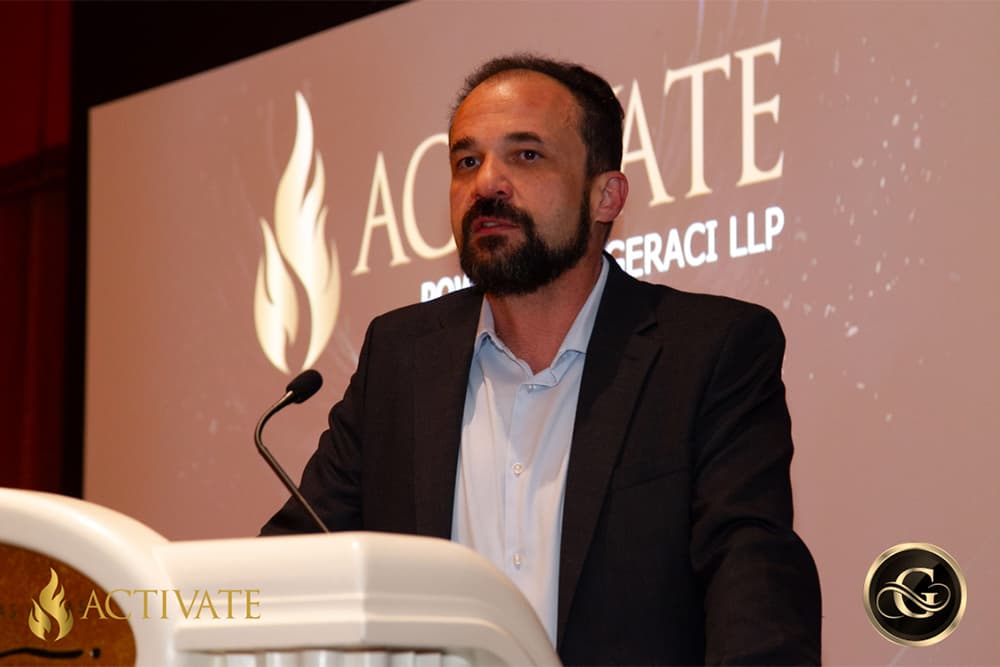
March 6, 2026. A Reception That Set the Tone Activate began with a two-hour Welcome Reception at the Allē Lounge on 66 at Resort World, Las Vegas, sponsored by Temple View. And while it was officially scheduled for two hours, the conversations didn’t respect the clock. The networking simply refused to slow down. That was the first signal. Capital sources reconnecting. Brokers, Lenders, Service Providers, all the industry together expanding relationships. Real conversations about what’s working — and what’s no longer working — in private lending. Anthony Geraci not only welcomed the room — he worked it. You could see him moving between groups, introducing participants to one another, connecting lenders with brokers and operators with capital sources. He wasn’t just hosting an event; he was doing what he does best — building bridges. And in many ways, that set the tone for everything that followed. But beyond the conversations, the strategy, and the networking, there was something else in the room: people were having a great time. The energy was relaxed, the laughter constant, and the photos from the evening make it clear — this industry knows how to work hard, but it also knows how to enjoy the moment together. Three Tracks, One Ecosystem If Elevate was about vision, Activate was about execution. The structure of the event made that clear from the start. Instead of placing every conversation in the same room, Activate was designed around three dedicated tracks that reflect the real structure of today’s private lending industry: Broker Track Balance Sheet Lender Track Securitizer Track Each track addressed a different piece of the ecosystem. Brokers focused on deal flow and business building. Balance sheet lenders examined operations, capital strategy, and platform scalability. Securitizers explored institutional capital markets and structured finance. The result was a conference where attendees could dive deeply into the part of the industry that most directly impacts their business. The only challenge? For many of us, we wanted to attend all of them. Fortunately, moving between rooms and speaking with participants allowed us to capture a number of key insights from the panels across the three tracks. The Balance Sheet Lender Track: Building Durable Lending Platforms The Balance Sheet Lender Track focused on the operational and financial infrastructure required to build scalable lending platforms. The morning began with “Revenue Reloaded: Strategies for Bridge and DSCR Lending,” featuring Jennifer McGuinness (Pivot Financial), Jeff Tesch (RCN Capital), and Steve Trowern (Temple View Capital). The panel explored how lenders refine loan profitability through disciplined underwriting, creative structuring, and strong broker relationships. Operational infrastructure took center stage in “Building Smarter Funds: Structures, Compliance, and the Tech-Enabled Back Office,” with David Rosenberg (FUTURES Financial), Matthew Zonies (Bluestone Commercial Capital), Nicholas Blonski (Armanino), Kaene Soto (Geraci LLP), and Joshua Nevarez (Armanino). The discussion highlighted how modern lending funds rely on strong compliance frameworks, reporting systems, and technology to maintain investor confidence while scaling operations. The conversation then turned toward strategic decision-making in “Riches and Niches: Knowing What Can—and Can’t—Be Optimized.” Panelists Richard Katz (Rodeo Lending), Jon Hornik (LHR&G Private Lender Law), Marcus Carter (La Mesa Fund Control and Escrow / Construction Risk Mitigation Services), Liam Leonard (Lionscore), Thayne Boren (Sekady), and Romney Navarro (Ragland Navarro Capital) explored how lenders balance data-driven models with experience and judgment when identifying profitable lending opportunities. Capital formation was the focus of “Fueling the Balance Sheet: Modern Capital Strategies for Scalable Lending,” with Sanjay Patel (Nomura Securities International), Matt Burk (Verivest), Aaron Metaj (Lima One), Shawna Phelan (SDC Capital), and Kendra Rommel (FUTURES Financial) discussing how lenders structure capital stacks, negotiate warehouse facilities, and prepare for institutional expansion. The track concluded with “The Hidden Risks of Servicing: Compliance, Controls, and the Cost of Getting It Wrong,” featuring Enrique Flores (Servicing Pros Inc.), Kaene Soto (Geraci LLP), Nate Cater (PHOCIS Tech), Casey Reichel (Sage Credit Income Fund), and Nathan Goodhart (The Mortgage Office). The panel highlighted how servicing, often underestimated, carries significant regulatory and operational risk if not managed properly. The Broker Track: Turning Deal Flow into Scalable Businesses The Broker Track addressed the role brokers play as the originators of opportunity within the private lending ecosystem. The day opened with “Instant Leverage: Become the Lender Overnight,” where Mark McCormick (Lido Private Credit), Valerie Saunders (NAMB), James Baisley (Temple View), and Josh Stech (Sundae) explored how brokers can expand their role through table funding and correspondent lending models. Deal sourcing and lender relationships were the focus of “Maximizing Deal Flow: Navigating Balance Sheets and Securitizers,” with Peter Steigleder (HypoCap LFS), Dana Georgiou (Lending Luminary), Jeremy Adrian (Crown Capital Resources), Sam Chivitchian (Secured Capital Lending / SCL Funding), and Avalon McLeod (Alba Capital Advisory) discussing how brokers position deals across different lender models. Later in the day, Adonis Lockett (Smart Money Blueprint) led two sessions focused on broker growth. In “Conventional to Private Money Broker,” he explored how professionals transition into private lending brokerage. In “Starting Your Own Lending Business,” he discussed the operational mindset and structure required to build a sustainable brokerage platform. Across these sessions, the message was clear: the most successful brokers today are not just closing deals — they are building structured businesses designed for scale. The Securitizer Track: Connecting Private Lending with Institutional Capital The Securitizer Track explored how private lending platforms connect with institutional capital markets and structured finance. The day began with “Wholesale vs. Retail: Choosing Your Pipeline Strategy,” featuring Doug Roberts (IceCap Group), Brian O’Shaughnessy (ARDRI), Ketan Parekh (Toorak Capital Partners), Jan Brzeski (Sage Credit Investment Partners), and Brendan Boyle (Temple View Capital). The panel explored how securitized lenders decide between building retail origination channels or leveraging wholesale broker networks. Capital diversification was the focus of “Beyond Securitization: Building Forward Flow Agreements and Strategic Partnerships,” where Jen Press (RiskSpan), Frank Shiau (Pretium), Jennifer McGuinness (Pivot Financial), and Steve Trowern (Temple View Capital) examined how lenders expand liquidity through forward flow agreements and institutional partnerships. Institutional market mechanics took center stage in “Inside Rated RTL Issuance: Building

By adm1n_2411
Max Chera

Closing Fast Without Cutting Corners: Dos and Don’ts for Time-Sensitive Loans

March 5, 2026. Deals can disappear fast: sometimes in days, sometimes in hours. That kind of pressure is exactly what makes time-sensitive loans tough to handle, but it’s also what separates a good loan officer from a great one. At Express Capital Financing we’ve seen both outcomes. We’ve watched borrowers close on incredible opportunities because their loan officer had every piece lined up. We’ve also seen deals collapse because simple steps were missed, or because the process dragged longer than it should have. The truth is, when a borrower comes to you with a time-sensitive deal, the difference between closing and missing out often comes down to how you manage the loan process. What smart loan officers do when time is tight So what actually makes the difference when the clock is ticking? These are the actions I’ve seen matter most when you’re working on a time-sensitive loan. Do: set realistic expectations upfront One of the biggest mistakes in a time-sensitive loan is letting the borrower get tunnel vision on rate. Of course, everyone wants the lowest number possible. But, in these situations, the real wins are certainty and speed. As I often remind borrowers, what matters is the payment and the income. If the numbers on the deal make sense, then shaving a fraction off the rate won’t make or break the investment. What will make or break it is whether the loan actually closes on time. Your job is to make sure borrowers understand that trade-off from the very beginning. Do: prepare your borrower in advance The more groundwork you do before a deal even hits the table, the smoother the process will be. A borrower who has a soft credit pull, Track Record, Entity docs and property information ready can close in 10 days. Without them, that same loan could take 30. Encourage your investors to treat documentation as part of their deal prep. Just like they wouldn’t walk into a negotiation without running the numbers, they shouldn’t expect financing to move quickly without the paperwork in place. Do: communicate constantly Fast-moving deals are stressful. Investors are juggling sellers, brokers, inspections, and deadlines all at once. If their loan officer goes silent, it creates unnecessary panic. That’s why proactive communication is so important when handling a time-sensitive loan. Even if there’s no update, the borrower should still hear from you. A daily check-in during underwriting keeps them informed and keeps you in control of the process. Do: leverage lender relationships Not every lender can move quickly. Some simply don’t have the processes or appetite for speed. That’s why your lender relationships are everything. If you already know which partners specialize in time-sensitive loans, you’ll be able to deliver when your borrower needs it most. At Express Capital Financing, we’ve built our entire platform around serving investors who can’t afford to wait. Loan officers who know how to tap into that capability are the ones who get repeat business from serious borrowers. Do: verify deal economics Moving fast shouldn’t mean cutting corners. A time-sensitive loan still needs to make financial sense. Run the numbers and confirm the terms align with the borrower’s projected ROI. Sometimes that means choosing a slightly higher interest rate in exchange for certainty and speed, and that can still be the winning move. Again, the best loan is the one that closes on time and supports the deal’s profitability. That’s not always going to be the cheapest one. The missteps that kill time-sensitive loans Over the years I’ve seen plenty of time-sensitive deals fall apart because the loan officer has made some simple mistakes. Here are the pitfalls you should try to avoid. Don’t: chase the lowest rate at the expense of speed It’s tempting to hold out for a slightly better rate, but for a time-sensitive loan that mindset can cost your borrower the entire deal. Market conditions change quickly and, by the time you’ve locked in the “perfect” rate, the property may be gone. The truth is, serious investors care more about getting the deal done than saving a fraction of a percent. Don’t: underestimate compliance checks When the clock is ticking, it’s tempting to rush the paperwork. That’s a huge mistake. Missing details or sending incomplete documentation doesn’t speed things up; it slows them down. Compliance checks exist for a reason, and red flags raised later on can delay or even derail a closing. Take time upfront to get it right and the rest will move faster. Don’t: neglect the appraisal timeline If there’s one step that consistently holds up a deal, it’s the appraisal. You can’t control the appraiser’s calendar, but you can control how early you order it and how closely you track turn times. A missed appraisal deadline can wipe out all the other effort you put into moving fast. Don’t: skip borrower education Not every borrower understands how different a time-sensitive loan is from a traditional mortgage. If you don’t explain the trade-offs early, they may push back at the wrong moment. Sometimes it means paying a point higher to get the certainty they need. That’s not a loss, that’s securing the opportunity. Your job is to frame it that way. Don’t: overpromise This is the big one. Borrowers would rather you tell them 12 days and close in 11, than promise 7 and close in 12. In time-sensitive deals, credibility is everything. Overpromising might win you one client, but it won’t win you repeat business. Turning pressure into opportunity Time-sensitive loans put loan officers under pressure, but they also create some of the best opportunities to build long-term client relationships. When you set expectations clearly, keep communication tight, and partner with lenders who can move quickly, you become the person investors trust when the stakes are highest. Max Chera Managing Partner and COO at Express Capital Financing Click to contact Max Chera, Managing Partner and co-founder of Express Capital Financing, is a recognized expert in real estate and hard money lending. Max built a successful

By adm1n_2411

Rocco-Mandarino-NYC

Breaking the Cap: Executing a 14-Unit DSCR Portfolio Beyond Institutional Limits

February 25, 2026. Summary In Houston, Texas, a real estate investor was under contract to acquire 14 newly constructed townhomes as long-term rental assets. The total financing requirement was $3,694,404, structured as acquisition loans. While the asset quality and borrower profile were strong, the transaction exceeded two common secondary market thresholds. Most DSCR note buyers cap exposure at 10 financed properties per sponsor and limit aggregate loan balances at $3,000,000. Placing and closing all 14 loans individually required a capital markets strategy and not just underwriting execution. Rocco Mandarino, Branch Manager of Maverick Lending NYC, structured and executed 14 separate DSCR loans, navigating concentration limits while preserving flexibility and delivering synchronized closings across the entire portfolio. Real Stories. Real Challenges. Real Solutions. Every loan has a story behind the numbers. In this section, The Elite Officer highlights real-world cases where Loan Officers turnedcomplex challenges into successful closings. Each case shows how persistence, creativity, and financial strategy can make the difference between a stalled deal and a successful closing. The Deal at a Glance Property Type: 14 Newly Constructed Townhomes (Build-to-Rent) Location: Houston, Texas Total Loan Amount: $3,694,404 Structure: 14 Individual DSCR Loans Leverage: 70% LTV Product: 30-Year Fixed DSCR Financing Strategy: Long-Term Rental Hold The Challenge The primary obstacle was certainly not borrower qualification. It was institutionalallocation. Most secondary market participants enforce exposure caps of: 10 financed properties per sponsor Approximately $3 million in aggregate loan balance This transaction exceeded both. Without strategic placement, the borrower would have faced either a denial due to concentration risk or pressure to consolidate into a blanket loan structure, reducingliquidity and long-term flexibility. The second challenge was operational. Closing 14 individual loans simultaneously is no simple transaction. It requires: Parallel underwriting across multiple files Standardized appraisal methodology across identical new-construction units Consistent DSCR modeling assumptions Coordinated closing schedules Many lenders lack the infrastructure to execute multi-file DSCR transactions withoutstaggered approvals, valuation discrepancies, or operational bottlenecks. Scale exposes weaknesses. Precision eliminates them. The Solution This transaction was approached from a capital markets perspective first. Capital Strategy Rather than forcing the portfolio into a single execution channel, the loans were structured to align with institutional note-buyer thresholds while managing exposure limits. Clean documentation, consistent credit profiles, and disciplined leverage positioning allowed the transaction to be placed strategically without breaching concentration caps. The result: full allocation of all 14 loans without compromising pricing or structure. Structural Design Each property was financed individually to preserve: Asset-level liquidity Selective refinance optionality Independent exit strategies Reduced cross-collateralization risk For build-to-rent investors, flexibility is a long-term advantage, and this structure protected it. Operational Execution Maverick Lending NYC has built its platform exclusively around DSCR and Non-QM lending. Dedicated processors, underwriters, and closers focus solely on investment-propertyexecution. That specialization enabled: Simultaneous underwriting tracks Appraisal consistency across all units Tight coordination between operations and capital markets Synchronized closings across 14 files This was not volume for volume’s sake. It was controlled institutional execution at scale. The Outcome The full $3,694,404 acquisition package closed successfully. The borrower secured long-term fixed financing at strong leverage, retained full asset-level flexibility, and avoided restrictive blanket loan structures. More importantly, the transaction demonstrated that with the right capital strategy and operational design, DSCR lending can scale beyond conventional secondary market limits. Takeaways for Loan Officers Understand note-buyer concentration caps before structuring multi-property deals. Specialized DSCR platforms outperform generalist lenders at scale. Preserve investor flexibility through individual asset structuring. Build operational systems that allow synchronized multi-file execution. Rocco Mandarino Branch Manager of Maverick Lending NYC Click to contact Rocco Mandarino is Branch Manager of Maverick Lending NYC, leading a platform focused exclusively on DSCR and Non-QM investment property financing. In 2024, he originated over $93 million and is projected to rank among the nation’s top private DSCR originators in the upcoming Scotsman Guide release. He specializes in build-to-rent portfolios, luxury SFR assets, and institutional-scale acquisition structuring.

By adm1n_2411

James Lawrence - Elevate 2026

Elevate 2026: Where Limits Feel Smaller

Anthony Geraci did it again. For the first time, I had the chance to step back and take in almost every panel in its entirety — listening, observing, and seeing how the ideas aligned across the day. And what stood out wasn’t just the quality of the speakers. It was the alignment. Each panel had its own angle. Different backgrounds. Different verticals. Different business models. But they all converged on one idea: Elevate yourself. Not just your production. Not just your capital stack. Not just your deal flow. Yourself. Two Presentations That Electrified the Room Without question, the loudest applause of the event went to two speakers who, at first glance, seemed like outsiders to our industry: James Lawrence Molly Bloom I’ll be honest — initially, I wondered what two figures from outside private lending would bring to a room full of lenders, brokers, fund managers, and capital allocators. After hearing their stories, I understood exactly why they were there. Both presentations delivered something this industry rarely pauses to talk about: Resilience. Discipline. Identity. Reinvention. You walked out energized — not hyped, energized. With that quiet internal conviction that you simply cannot stop until you reach your objective. James Lawrence: The Real Opponent Was Never the Course James Lawrence didn’t just talk about endurance. He redefined it. He began with what, for most athletes, would already be a lifetime achievement: completing 30 full-distance Ironman triathlons in a single year, breaking the previous world record of 20. That alone would have secured his place in the record books. But that wasn’t the moment that defined him. Midway through that journey, Lawrence saw a video titled “Dayton’s Legs.” Dayton was a young man living with severe cerebral palsy — unable to walk, talk, run, or swim — yet he dreamed of becoming an Ironman. Lawrence reached out. They met in Lake Havasu and entered the race together. The swim went smoothly. But 30 miles into the bike segment, Dayton’s carriage malfunctioned. What should have been a four-hour cycling leg turned into nine grueling hours. Every pedal stroke felt like climbing a mountain. Lawrence did the math. They were slipping behind the cutoff time. Disqualification felt inevitable. “I absolutely wanted to quit,” he admitted. But quitting wasn’t an option. He would look back and see Dayton — who physically could not ride the bike on his own — and realize that if he stopped, Dayton would never cross that finish line. Sixteen hours and forty minutes after the start, they crossed it together. And that’s when the real lesson surfaced. Because after 30 Ironman races in one year… after pushing past what most consider human limits… Lawrence didn’t stop. He went on to complete 50 Ironman-distance races in 50 consecutive days across all 50 U.S. states. And later, he elevated the challenge again: 100 Ironman-distance triathlons in 100 consecutive days. Each accomplishment was already more than enough. And yet, he kept asking: Why not the next one? But here’s what surprised the room: The hardest part was never the distance. It wasn’t the weather. It wasn’t the fatigue. It wasn’t the broken bike. It was the voice in his own head. “You can’t do this.” “You don’t belong here.” “Stop.” He said those thoughts appeared thousands of times during every race. The difference wasn’t that he silenced them. He learned to live with them. And eventually, he learned to reverse them. Every time the mind demanded retreat, he flipped the narrative. That internal resistance became fuel. The real endurance test wasn’t muscular — it was mental. And in that room full of lenders, brokers, operators, and capital allocators, the connection was obvious. The external race is never the real one. The real race is against the voice that tells you to quit. What Elevate Really Means And maybe that was the real reason he was on that stage. Because in private lending, the distances look different — but the voice is the same. “You can’t scale in this market.” “Margins are tighter.” “Capital is harder.” “Sit this cycle out.” The terrain changes. The headwinds shift. The numbers fluctuate. But the real opponent is still internal. Lawrence reminded the room that limits rarely arrive as walls. They arrive as whispers. And the people who elevate aren’t the ones who never hear them — they’re the ones who refuse to obey them. At Elevate 2026, that message landed clearly: The course will always be long. The conditions will rarely be perfect. But the only ceiling that truly matters is the one we negotiate with ourselves. And that is where elevation begins. Uriel Fleicher Editor in Chief and Co-Founder of The Elite Officer. Uriel Fleicher is a lawyer from Argentina with a strong academic background, holding a Master in Business Law and currently pursuing an MBA. Throughout his extensive career, he has provided legal counsel to Private Lending Firms in Argentina, which allowed him to establish valuable connections with key industry leaders in the United States. This experience enabled him, along with his partners, to identify a unique opportunity: the creation of The Elite Officer.

By adm1n_2411

Elevate 2026

Elevate 2026: Day 2 Panels — Key Takeaways with Molly Bloom

March 5, 2026. After a powerful first day of discussions, Day 2 of Elevate 2026 continued with another series of conversations that moved between strategy, leadership, and the human side of building businesses in private lending. Among the standout moments was the appearance of Molly Bloom, whose extraordinary story — known to many through Molly’s Game — brought a different kind of energy to the stage. Her reflections on resilience, pressure, and rebuilding after failure resonated strongly with a room full of entrepreneurs and dealmakers. But Bloom was only one part of a broader lineup of speakers and panels that continued to unpack the realities of today’s lending landscape. The Anatomy of a Private Loan: Documentation, Compliance, and Designed Protection Anthony Geraci, Esq. CEO & Founder of Geraci, LLP took the stage not to overwhelm the room with statutes or code sections, but to demystify the legal framework that surrounds private lending. In a space where speed and yield often dominate the conversation, he slowed it down and explained — in practical terms — what actually protects a lender: proper documentation, enforceable guarantees, thoughtful underwriting language, licensing awareness, and a clear understanding of business-purpose versus consumer-purpose transactions. He translated complex legal structures into operational clarity, helping brokers and lenders understand not just what documents to use — but why they matter. He framed private lending as a river with significant opportunity — but also powerful currents. The returns can be attractive, the flexibility appealing, and the growth real. But beneath the surface, there are rocks: Usury thresholds. State licensing traps. Title and insurance gaps. Default interest miscalculations. Structural mistakes that only surface when a deal goes bad. In fast water, confidence is important. But navigating safely requires a captain who knows where the rocks are — and how to steer before you hit them. Molly Bloom: Resilience Under Pressure Molly Bloom brought a different kind of intensity to Day 2 — not through industry jargon, but through a story about identity, collapse, and rebuilding. Known for the journey behind Molly’s Game, Bloom framed her keynote as a blueprint for what happens when life falls apart: how to keep getting up, stop negotiating with fear, and use adversity as raw material for reinvention. From a youth career in competitive skiing interrupted by severe scoliosis — and later ended by a freak accident — she emphasized a lesson that stayed with her: the voice of doubt is not the problem; the problem is listening to it. Her most resonant takeaway for a room full of entrepreneurs and dealmakers was about integrity, emotional intelligence, and ownership. Bloom described how her success came not from access, but from mastering human behavior — creating trust, making people feel safe, and building experiences where relationships mattered more than status. And when everything imploded — federal indictment, assets seized, public humiliation — she refused the “easy exit” of selling out others to save herself, choosing instead to rebuild her life through accountability and purpose. The message landed clearly: in high-pressure worlds, resilience is not a slogan — it’s a practiced skill, and character is what determines who earns a second chance. Secrets to Closing More Deals in 2026 Bob Eakin, CEO of JCap Private Lending, and Aaron Siefker, Partner, centered their discussion on a simple but often overlooked advantage in private lending: speed. In a market where property values are flattening and inventory remains tight, they argued that the brokers who succeed are those who understand how to move quickly and position the right deal with the right lender. According to the panel, closing more deals in 2026 is less about chasing volume and more about mastering the mechanics of execution — knowing your file, understanding the lender’s real parameters, and presenting the full story of the borrower and the asset from the start. A key theme throughout the session was that private lending remains a people business. Brokers act as the bridge between borrower and capital, and the most successful originators are those who build trusted relationships with lenders who understand their deals. When a broker truly knows a lender’s box — the geography, asset types, loan sizes, and risk tolerance — deals can move from initial conversation to approval in hours rather than weeks. The panel also highlighted where many deals are actually found. Rather than waiting for listings to appear publicly, they encouraged brokers to look for “life events” — moments when borrowers suddenly need liquidity or speed: divorces, inheritances, probate situations, bridge financing for a purchase before a home sells, or investors needing short-term capital to unlock a new opportunity. In those moments, bridge lending becomes less about interest rate and more about solving a problem quickly — and the broker who identifies that moment first is often the one who closes the deal. Final Reflection Elevate 2026 wasn’t just another conference on the calendar. It was a reminder. A reminder that growth is possible — but only when energy meets structure, opportunity meets discipline, and ambition meets responsibility. The inspiration was real. The strategies were actionable. The risks were clearly defined. And the relationships felt intentional. When you combine resilience, operational clarity, legal awareness, and a community that holds itself accountable, something shifts. That’s when limits start to feel smaller. And that may be the real reason rooms like this matter. Uriel Fleicher Editor in Chief and Co-Founder of The Elite Officer. Uriel Fleicher is a lawyer from Argentina with a strong academic background, holding a Master in Business Law and currently pursuing an MBA. Throughout his extensive career, he has provided legal counsel to Private Lending Firms in Argentina, which allowed him to establish valuable connections with key industry leaders in the United States. This experience enabled him, along with his partners, to identify a unique opportunity: the creation of The Elite Officer.

By adm1n_2411

Elevate 2026

Elevate 2026: Day 1 Panel Takeaways

March 5, 2026. In our previous article, Elevate 2026: Where Limits Feel Smaller, we explored the powerful energy James Lawrence brought to the stage. Now, we turn to the rest of the conversations and panels from Day 1 of Elevate 2026, where industry leaders shared practical insights on strategy, growth, and the evolving landscape of private lending. When the Same Words Don’t Mean the Same Thing Valerie Saunders, Chief Executive Strategist at NAMB, and Kendra Rommel, Principal and Co-Founder at FUTURES Financial, opened the conversation by highlighting a reality that many in the room immediately recognized: in mortgage and private lending, we often use the same terminology while operating in completely different regulatory and structural worlds. From forward mortgages to bridge loans, DSCR products, business-purpose lending, and consumer-purpose transactions, the panel made it clear that vocabulary in our industry is not interchangeable. What sounds identical in conversation can carry dramatically different compliance obligations depending on licensing requirements, foreclosure frameworks, and whether the transaction is borrower-credit driven or asset-based. It was a powerful reminder that growth without clarity is risk. From Conventional to Private Money Adonis Lockett, Principal at Smart Money Blueprint, shifted the room with a blunt statement: “In real estate, the money isn’t in real estate — the money is in the money.” His focus wasn’t on replacing conventional lending, but on building a private lending vertical that transforms declined deals into funded opportunities. He walked brokers and loan officers through the ladder — brokering private loans, moving into white-label structures to protect relationships, progressing to table funding, and eventually positioning themselves to become direct lenders. The message was clear: private lending is not a side hustle. It’s a structured ecosystem that, when understood properly, can outperform every other revenue channel in your business. But his strongest message wasn’t about leverage or pricing — it was about culture. He described private lending as a family — a tight network where everyone knows everyone, where lenders speak behind the scenes, compare notes, and protect the integrity of the space. One burned deal, one sloppy submission, one attempt to play lenders against each other — and your name travels fast. He admitted openly that his own early mistakes forced him to learn the business properly, humbling him despite his success in other arenas. In private lending, transactions come and go — relationships are what keep you alive. Running a Lender Like a Business: P&L, Time, and the True Cost of Ownership Bill Tessar, CEO of CV3 Financial, joined by Gina Comeaux, Vice President of Communications of CV3, brought a pragmatic counterbalance to the room. The discussion centered on the operational side of private lending — understanding P&L discipline, capital deployment strategy, cost structure, and the real responsibility that comes with running a lending platform. The emphasis wasn’t on product innovation, but on execution: how underwriting standards, time efficiency, portfolio management, and margin awareness ultimately determine whether a lender scales sustainably or simply grows exposure. It was a timely reminder that in this market, structure and discipline matter just as much as opportunity. How do you find Borrowers? Josh Stech, founder of Sundae and Just Be the Bank, addressed one of the biggest concerns circulating across the private lending industry: the growing presence of institutional capital. While many lenders feel that large funds and securitized platforms are squeezing smaller operators out of the market, Stech argued that the data tells a different story. According to industry figures he shared, roughly two-thirds of all private lending transactions are still completed by lenders originating fewer than 100 loans per year—evidence that smaller, agile lenders continue to dominate much of the market. His message to the audience was clear: competing with institutions is not about lowering prices. Trying to win on cost against large capital sources is a losing strategy. Instead, smaller lenders succeed through differentiation—leveraging flexibility, local knowledge, and stronger borrower relationships. By identifying repeat borrowers and building smarter sourcing pipelines using public real estate data, Stech explained, lenders can continue to grow and compete effectively even as the industry becomes more institutionalized. From Lender to Dealmaker: Reinventing Your Career When the Playbook Stops Working. Romney Navarro, CEO of Ragland Navarro Capital, shared how he transformed his role in the industry by intentionally building community. His central idea was that real authority in private lending doesn’t come from marketing or scale alone, but from becoming the connector in the room. By creating recurring gatherings of investors, operators, and capital providers, he positioned himself at the intersection of real estate, capital, and opportunity—turning networking into a structured engine for deal flow. Navarro explained that the model relies on three key elements: cultivating centers of influence, designing structured events with expert content and deal pitches, and building a funnel that converts conversations into real opportunities. The result, he noted, is that the person who hosts the community naturally becomes the first call when deals appear. In a relationship-driven industry like private lending, that position of trust can be more powerful than any marketing strategy. Be sure to explore the rest of our Elevate and Activate 2026 coverage, where we break down the conversations, strategies, and stories that are moving the private lending industry forward. Uriel Fleicher Editor in Chief and Co-Founder of The Elite Officer. Uriel Fleicher is a lawyer from Argentina with a strong academic background, holding a Master in Business Law and currently pursuing an MBA. Throughout his extensive career, he has provided legal counsel to Private Lending Firms in Argentina, which allowed him to establish valuable connections with key industry leaders in the United States. This experience enabled him, along with his partners, to identify a unique opportunity: the creation of The Elite Officer.

By adm1n_2411

Anthony Geraci

Interview | Anthony Geraci Announces the Release of Fund Formation 101

February 16, 2026. Download the Whitepaper Introduction Few figures have played a role as central in the evolution of the U.S. private lending industry as Anthony Geraci. As the founder of Geraci LLP, he has advised private lenders and fund managers since the earliest days of the industry, helping shape the legal and structural foundations that allowed private lending to scale into what it is today. Anthony is also a co-founder of the American Association of Private Lenders (AAPL) and the driving force behind two flagship annual conferences that have long accompanied his law firm’s growth—today known as Elevate and Activate. In addition, he has founded and co-founded multiple companies across the private lending ecosystem, always with a strong focus on education, professionalism, and long-term industry growth. Today, we sit down with Anthony to discuss the launch of a special new white paper, Fund Formation 101 – Structuring a Private Lending Fund for Success, a practical guide designed to help private lenders navigate one of the most consequential decisions in their growth journey. Uriel:Anthony, first of all, thank you for taking the time to speak with us. I’d love to start by asking — what inspired you to put this white paper together, and why did you feel that now was the right time to release it? Anthony: Honestly? I’ve been watching too many lenders trip over the same structural landmines for the past two decades. We’re at this interesting inflection point in private lending where more and more operators are ready to graduate from deal-by-deal syndications to real fund structures—but a lot of them are doing it without understanding what they’re actually signing up for. The timing felt right because the market’s matured to where institutional capital is genuinely interested in private lending funds, but the education gap is still huge. I’m tired of getting calls from managers 18 months into a fund saying “we didn’t include leverage authorization and now the bank wants it” or “we can’t handle these redemption requests.” Those aren’t just rookie mistakes—they’re expensive ones that could’ve been avoided with the right roadmap upfront. Plus, let’s be real: there’s a ton of generic fund formation content out there, but almost nothing that speaks specifically to the nuances of private lending. This industry deserves better than cookie-cutter advice. Uriel: In the white paper, you emphasize that fund formation is not just a legal step, but a strategic one. Why is that distinction so important for private lenders to understand? Anthony: Look, anyone can draft an operating agreement and file some forms. That’s the legal part, and frankly, it’s the easy part. But here’s the thing most managers don’t realize until it bites them: the structural decisions you make on day one dictate what you can and can’t do for the entire life of the fund. Think about it this way—choosing between an open-end and closed-end structure isn’t just checking a box. That decision affects your waterfall, your investor base, your ability to leverage, your exit strategy, everything. Same with whether you go 3(c)(1) or 3(c)(7). Those aren’t just compliance choices—they’re strategic positioning decisions that determine whether pension funds can even look at you. I’ve seen managers treat fund formation like a transaction they need to get done so they can start raising money. Wrong mindset. The ones who succeed treat it like they’re building the foundation of an institution. Because that’s what you’re doing. You’re not just creating a legal entity—you’re defining how your business will operate, scale, and compete for the next 5-10 years. Bottom line: Your fund structure should enable your business strategy, not constrain it. That requires thinking strategically, not just legally. Uriel: From your experience advising fund managers, what is the most common mistake lenders make when launching their first fund? Anthony: Hands down: underestimating operational infrastructure. It’s not even close. First-time managers get so focused on the legal documents and raising that first close that they completely overlook the operational backbone they’re going to need. Then six months in, investors are asking where their quarterly statements are, the IRS wants K-1s, someone’s requesting a redemption, and suddenly they’re drowning in administrative tasks they never budgeted for. Here’s a classic example: I had a client last year who raised $30 million for their first fund—crushed it on the capital raise. But they didn’t set up a fund administrator, didn’t have an investor portal, were trying to calculate NAV themselves in Excel. Three months later, a family office asked for their SOC 1 report during due diligence. They didn’t even know what that was. Killed the whole deal. The irony is that the operational stuff isn’t that expensive relative to the fund size, but it feels like overhead when you’re in startup mode. So managers skip it, thinking they’ll “add it later.” But “later” is when you’re trying to impress institutional investors who expect white-glove service from day one. My advice? Budget for third-party admin, annual audits, and proper loan servicing infrastructure from the jump. It’s way cheaper than trying to bolt it on after you’ve already made a mess of your investor reporting. Uriel: Education is a central theme of this white paper. What role do you believe education plays in the maturity and long-term credibility of the private lending industry? Anthony: This is something I’m genuinely passionate about, so buckle up. Private lending has this reputation problem, right? For years, it was seen as the Wild West—high rates, light documentation, not particularly sophisticated. And some of that reputation was earned. But the industry has evolved massively, and if we want to keep attracting institutional capital and compete with other alternative asset classes, we need to professionalize. Education is how that happens. When managers understand securities compliance, when they build proper governance structures, when they report like institutional asset managers—that’s when the industry gains credibility. It’s when pension funds and endowments start taking you seriously. But here’s the thing: you can’t fake it. Investors—especially sophisticated ones—can smell inexperience a mile away. They’re not looking for

By adm1n_2411

Lima One housing

Lima One Capital Releases Its 2026 Housing Market Overview

Lima One Capital has released its 2026 Housing Market Overview, a whitepaper that compiles projections and analysis from leading housing and economic sources to assess what real estate investors may encounter in the coming year. The report covers mortgage rates, home prices, housing inventory, rental trends, fix-and-flip performance, and construction outlook, offering a broad macro snapshot for investors operating in today’s higher-rate environment. Mortgage Rates: A Higher-for-Longer Landscape Mortgage rates remained above 6% throughout 2025, contributing to slower refinance activity and continued affordability constraints. Looking ahead, projections referenced in the report place unemployment near 4.2% and inflation around 2.4% in 2026. In that context, substantial rate cuts may be limited in the near term, potentially keeping mortgage rates close to current levels unless broader economic conditions change. Home Prices: Measured Appreciation Home prices appreciated at a modest 2–3% pace in 2025. For 2026, forecasts cited in the whitepaper range between approximately 1.2% and 4%, depending on the source. This range suggests continued appreciation, though at a more moderate and sustainable pace compared to the accelerated growth seen in previous cycles. Housing Inventory: Toward a More Balanced Market Inventory levels hovered between four and five months of supply in 2025, a level historically considered balanced. New construction inventory ended the year closer to seven months of supply, which may create more competitive selling conditions in certain markets, particularly for builders completing new projects. Rental Trends: Steady but Incremental Growth Occupancy rates remain elevated, near 94%, above long-term historical averages. Rent growth is projected between 1% and 3% in 2026, pointing to incremental expansion rather than rapid acceleration across most rental markets. Fix and Flip: Margin Compression The fix-and-flip segment has slowed over the past two years. In Q3 2025, average profit margins declined to roughly 23%, the lowest level since 2008, while median gross profits fell below $60,000. At the same time, foreclosure activity has begun to rise modestly year over year, though levels remain below pre-pandemic benchmarks. The report suggests that distressed inventory may gradually reintroduce selective opportunities in certain markets. Construction Trends: Costs Remain a Factor Material prices rose in 2025, and labor costs continued to increase at a higher rate. Housing starts are projected to remain relatively consistent in 2026, signaling ongoing development activity despite tighter margins and cautious builder sentiment. Overall, Lima One Capital’s 2026 outlook reflects a market characterized by stability, tighter margins, and the need for disciplined execution. The full whitepaper includes detailed charts, projections, and source references and is available directly through Lima One Capital. Download the Whitepaper Uriel Fleicher Editor in Chief and Co-Founder of The Elite Officer. Uriel Fleicher is a lawyer from Argentina with a strong academic background, holding a Master in Business Law and currently pursuing an MBA. Throughout his extensive career, he has provided legal counsel to Private Lending Firms in Argentina, which allowed him to establish valuable connections with key industry leaders in the United States. This experience enabled him, along with his partners, to identify a unique opportunity: the creation of The Elite Officer.

By adm1n_2411

Ben Shara

How Creative Structuring and Trust in the Borrower Turned a Risky Appraisal into a Profitable Exit

February 16, 2026. Summary Faced with a low property appraisal that threatened the financial viability of a significant investment, Ben Shrara and the team at Express Capital Financing crafted an innovative solution: they increased the ARLTV ratio beyond typical limits and reduced the interest reserve to zero. This strategic decision not only salvaged the project by providing the necessary capital but also reinforced the importance of adaptability and strong client relationships in the face of unexpected financial challenges. The outcome demonstrated the transformative impact of custom-tailored financing solutions in ensuring the success of complex real estate deals. Real Stories. Real Challenges. Real Solutions. Every loan has a story behind the numbers. In this section, The Elite Officer highlights real-world cases where Loan Officers turned complex challenges into successful closings. Each case shows how persistence, creativity, and financial strategy can make the difference between a stalled deal and a successful closing. The Deal at a Glance Property Type: Single Family Location: Bethel, CT Loan Amount: $498,500 Rate: 12% Loan To Value: 88.1% Loan To Cost: 91.5% ARLTV: 71.7% The Challenge The project initially seemed like a routine investment for our seasoned client, necessitating a loan that covered 90% of the property’s purchase price and 100% of the renovation costs. However, complexities surfaced when the property in question was appraised at a lower value than anticipated, threatening to considerably reduce the loan amount available under typical lending conditions. Low Property Appraisal:Lower-than-expected property appraisal reducing available financing. Financial Leverage:Need for 90% purchase financing and 100% renovation costs unmet due to appraisal. Risk of Derailment:Financial constraints threatening project timeline and viability. The Solution Understanding the nuances of the deal and the importance of client relationships, Ben Shrara and the team at Express Capital Financing saw a way through the impasse. Leveraging their deep industry experience and trust in the client’s track record, they proposed an unprecedented solution: adjusting the After Repair Loan to Value (ARLTV) ratio to exceed the usual 70% limitation, and importantly, reducing the interest reserve to zero. This innovative, custom-tailored solution was crafted specifically to counteract the impact of the low appraisal, effectively increasing the borrowing limit and alleviating the financial strain caused by higher upfront costs. Adjusted ARLTV Ratio:Exceeded typical limits to increase borrowing potential. Zero Interest Reserve: Eliminated interest reserve requirement, saving the borrower approximately $4,000 in closing costs. Quick and Flexible Response: Quick adapted the deal to provide a fitting solution to the client’s unique challenges. Preserving Financial Strategy:Secured the required capital for timely project execution but also protected the client’s overall investment strategy. The Outcome With adjustments to the ARLTV ratio and the elimination of the interest reserve, the deal successfully closed, securing the funds required for both the property purchase and renovations. The investor avoided costly delays and achieved profitability, showcasing the value of custom-fit solutions provided by expert loan officers like Ben. Takeaway for Loan Officers Think Beyond Standard Lending Parameters: Adjustments to common metrics like ARLTV can help salvage deals and meet client needs. Leverage Relationships and Trust: Trust in a borrower’s track record can justify creative lending solutions. Act Quickly and Strategically: Timely adaptations to loan terms are often the difference between success and a stalled project. Be Client-Focused: Prioritizing the borrower’s success and crafting tailored solutions builds long-term relationships and mutual success. Ben Shrara Loan Officer at Express Capital Financing Click to contact Ben Shrara, a Loan Officer at Express Capital Financing, excels in Investment Purpose Real Estate Lending. With expertise in fix-and-flip loans, ground-up construction financing, DSCR loans, and bridge loans, Ben delivers tailored solutions to investors nationwide. His deep understanding of diverse asset types and creative financing strategies empowers clients to navigate complex deals and maximize profitability confidently.

By adm1n_2411

ElevateCon 2026

Elevate 2026: From Commissions to Capital

February 19, 2026. Build Wealth. Gain Freedom. Become the Lender. From February 24–26, 2026, at Caesars Palace in Las Vegas, Elevate: Commissions to Capital, hosted by Geraci Media & Events, brings together real estate professionals ready to make a decisive shift in their careers. For years, thousands of agents, brokers, and industry professionals have helped others close deals. They’ve generated commissions, built networks, and mastered transaction flow. But in 2026, the conversation shifts. Elevate is not just another private lending conference. It is a deliberate pivot point — designed for professionals ready to move from earning commissions to earning interest. That distinction changes everything. A Conference Designed for Professional Transition Elevate begins on February 24, 2026, with a Welcome Reception at the Pisa Ballroom, located on the Promenade Level at Caesars Palace, setting the tone with high-level networking among established lenders, operators, attorneys, and capital providers. From there, the event unfolds over a focused day and a half of structured, strategic programming built around one central objective: How to become the lender. This is not theoretical inspiration.This is business architecture. The Panels: From Strategy to Execution Elevate’s agenda is intentionally structured to guide attendees from mindset shift to practical execution. Each session builds on the last — redefining the broker’s role, breaking down operational and legal frameworks, exploring borrower acquisition and capital strategy, and ultimately focusing on scalability and long-term positioning in private lending. This is not theory; it is a step-by-step roadmap for professionals ready to transition from earning commissions to deploying capital. Rethinking the Broker’s Role in Private LendingValerie Saunders (CRMS, NAMB) & Kendra Rommel (FUTURES Financial) The Broker’s Blueprint in the Private Lending SpaceValerie Saunders (CRMS, NAMB) From Conventional to Private MoneyAdonis Lockett (Smart Money Blueprint) How to Find BorrowersJosh Stech (Sundae / Just Be the Bank) Running a Lending Business Like a BusinessBill Tesar (CV3 Financial) KeynoteJames Lawrence The Anatomy of a Private LoanAnthony Geraci (Geraci LLP) Secrets to Closing More Deals in 2026Bob Eakin (JCap Private Lending) KeynoteMolly Bloom Reinventing Your Career When the Playbook Stops WorkingRomney Navarro (Ragland Navarro Capital) Why Elevate Is Different The private lending industry is no stranger to conferences focused on: Interest rate trends Capital markets outlook General networking Elevate does not compete in that category. Elevate is a career transition conference. It is specifically designed for real estate professionals who want to: ✔ Fund their first deal ✔ Structure business purpose loans properly ✔ Raise and manage capital ✔ Build compliant infrastructure ✔ Understand licensing and entity formation ✔ Create long-term wealth instead of short-term commissions As the organizers describe it: “Private Lending in a Box.” A structured blueprint to move from earning commissions to deploying capital. For the audience of The Elite Officer, Elevate represents more than education — it represents evolution. And that conversation is just getting started. Uriel Fleicher Editor in Chief and Co-Founder of The Elite Officer. Uriel Fleicher is a lawyer from Argentina with a strong academic background, holding a Master in Business Law and currently pursuing an MBA. Throughout his extensive career, he has provided legal counsel to Private Lending Firms in Argentina, which allowed him to establish valuable connections with key industry leaders in the United States. This experience enabled him, along with his partners, to identify a unique opportunity: the creation of The Elite Officer.

By adm1n_2411

Steven Ernest

8 Essential Strategies for Successful Loan Recoveries

February 11, 2026. When a loan goes sideways, most lenders focus on one question: “How do we get paid?” The legal system asks a different question: “What are your rights, and can you prove them?” Lenders who maximize recoveries in California are usually not the ones who litigate the most—they’re the ones who plan enforcement early, document consistently, and deploy legal tools in the right sequence. Maximizing recovery is a blend of leverage, speed, and cost discipline. Below are eight practical legal strategies to consistently improve outcomes for private lenders. 1) Win the “paper battle” before you enter the courtroom Recoveries survive on documentation. If your file is clean, leverage improves; if it’s messy, the borrower gains room to delay and extort you. Legal best practices: Confirm enforceability: note, deed of trust, assignments, allonge/endorsement (where applicable), guaranties, riders, and any modifications. Verify lien position with an updated title report; identify tax liens, HOA liens, mechanics’ liens, and judgment liens. Document default and amounts owed with a defensible payment history, payoff calculation, and breakdown of charges. Preserve communications (especially around extensions, draws, and workout discussions). In litigation, emails become exhibits. They are the keys to disproving the testimony of your borrower about ‘what you told him’ on the phone. A strong file reduces litigation friction and helps you obtain early relief—stay relief in bankruptcy, appointment of a receiver, or pre-judgment remedies in state court. 2) Choose the right enforcement path: nonjudicial vs. judicial foreclosure (and when to pivot) California’s nonjudicial foreclosure process can be the fastest route to a sale. It is not always the best route to maximum recovery. Nonjudicial foreclosure tends to fit when: the title chain is clean, you want speed and leverage, your priority is taking the property or forcing a refinance/sale. Judicial foreclosure may fit when: there are priority disputes or title problems, you need court control (complex liens, waste, possession issues), a deficiency strategy is legally available and economically justified. Strategy tip: Many lenders start with nonjudicial foreclosure to set a clock, then pivot to judicial tools (receiver, injunction, or suit on guaranty) when the borrower escalates with litigation or collateral damage. There is no reason you can’t pursue both in tandem. You will need to choose one or the other before sale though. 3) Use receivers strategically to stop the bleeding and control information A receiver is often the single most powerful recovery tool in distressed real estate loans—especially income-producing property and broken construction projects. They are most often warranted for income generating properties (hotels, apartment buildings, office complexes). Why receivers matter: They stabilize operations, collect rents, and preserve collateral value. They create credible reporting for the court (rent rolls, expenses, condition). They reduce borrower mismanagement, diversion, and “informational chaos.” They can facilitate sales, cure code issues, and coordinate completion plans. When to consider a receiver: unpaid taxes/insurance, property neglect, waste, rent diversion or uncooperative property management, construction stalled with mechanics’ lien pressure, borrower interference with inspections, tenants, or security. Receivership also improves your position in bankruptcy scenarios: it can create a record of mismanagement and support relief from stay or adequate protection arguments. 4) Treat bankruptcy as a leverage contest, not a delay sentence Bankruptcy is frequently used to slow foreclosure. The lenders who recover well act quickly and force the debtor to prove a real plan. Key strategies: Relief from stay when there is no equity, no feasible plan, or lack of adequate protection. Cash collateral control (rents): require segregated accounts, budgets, reporting, and meaningful protection payments. Adequate protection: payments, insurance proof, taxes current, inspection rights, and replacement liens where appropriate. Proof of claim discipline: file complete claims including protective advances and fee entitlements supported by documents. Bankruptcy warning sign: A plan that depends on “future financing” without commitments, or a sale without timeline, while the debtor seeks to use your rents to fund the case. 5) Enforce guaranties intelligently—and early Guaranties are only valuable if pursued with a strategy. In California, guaranty enforcement can be a critical recovery lever, but it requires careful analysis of waivers, defenses, and the borrower/guarantor structure. Maximizing guaranty recoveries: Confirm the guaranty is properly executed, supported by consideration, and includes appropriate waivers. Assess collectability quickly: assets, income, real property holdings, entity interests, and exposure to other creditors. Use early remedies when warranted: prejudgment attachment (where available), injunctions for fraudulent transfers, targeted discovery, and stipulated judgments tied to workouts. Even when you do not intend to fully litigate against a guarantor, credible enforcement posture often drives faster payoffs. 6) Control litigation cost without losing pressure “Maximizing recovery” is not “spending unlimited legal fees.” It means spending legal dollars where they create outcomes: faster resolutions, better settlements, or protected collateral. Cost-effective litigation tools: Early motion practice to eliminate weak claims (demurrer/motion to dismiss, anti-SLAPP when applicable). Targeted discovery designed to force admissions: payment history, property condition, borrower representations, refinance claims. Early settlement structures that protect you: stipulated judgments, agreed receivers, confession-like remedies where legally permissible (not in CA), and agreed stay relief triggers. The goal is to shorten the runway for delay tactics. 7) Protect priority and prevent collateral impairment Recoveries often turn on what happens between default and resolution. Your job is to prevent value erosion. Legal strategies that protect value: Monitor and pay (then add to debt) taxes and insurance when necessary—then document the advance precisely. Demand inspection access and document waste; it supports receivership and stay relief. Track junior lien activity and mechanics’ liens; consider coordinated strategies to prevent senior position loss. Consider recording remedies where appropriate (e.g., abstracts after judgment) and perfecting any additional collateral rights. 8) Build settlement terms that actually perform Many “settlements” fail because they are optimistic and unenforceable. A recovery-focused settlement is one that assumes the borrower might default again. High-performing settlement terms include: Short timelines with concrete milestones Automatic enforcement triggers on missed deadlines Borrower acknowledgments of debt/default and waiver of defenses (where enforceable) Reporting requirements and inspection rights Stipulated receiver or agreed sale process Fee provisions that

By adm1n_2411

Lorena Diaz, Lima One

Scaling Without Breaking. The Capital Strategy Behind a Successful Heavy Rehab

February 10, 2026. Summary This case study highlights how Lorena Diaz, Capital Partner for Real Estate Investors at Lima One Capital, helped an experienced investor successfully scale from light rehab projects into a complex heavy rehab execution in Avondale Estates, Georgia. By strategically leveraging equity, structuring a high blended LTC loan, and delivering certainty of execution, Lorena enabled her client to confidently take on a significantly larger renovation while preserving liquidity and positioning the project for long-term growth. Real Stories. Real Challenges. Real Solutions. Every loan has a story behind the numbers. In this section, The Elite Officer highlights real-world cases where Loan Officers turned complex challenges into successful closings. Each case shows how persistence, creativity, and financial strategy can make the difference between a stalled deal and a successful closing. This project illustrates how the right capital partner can help investors responsibly expand their scope and elevate their portfolio. The Deal at a Glance Property Type: Single-Family Residence (Fix & Flip) Location: Avondale Estates, Georgia Loan Amount: $730,000 Rehab Type: Heavy Rehab Rehab Budget: $350,000 Blended LTC: 90% Closing Timeline: 10 days The Challenge The borrower had a proven history completing light rehab projects, but this opportunity required a step up in both scale and execution risk. The project involved a significantly larger renovation budget and required confidence in managing a heavy rehab from acquisition through completion. Key challenges included: Transitioning from cosmetic renovations to a full heavy rehab Preserving liquidity while taking on a larger scope Securing high leverage without compromising underwriting discipline Closing quickly in a competitive environment Without the right structure, the investor risked overexposing capital or delaying execution. The Solution Lorena approached the transaction as a capital strategy, not just a loan. As a Capital Partner for Real Estate Investors, she focused on aligning leverage, experience, and execution certainty. Her solution included: Structuring a 90% blended LTC loan that maximized leverage while remaining grounded in the project’s strong equity position Leveraging the projected after-repair value to support the borrower’s transition into a heavier rehab category Delivering a 10-day close, allowing the investor to secure the deal without disruption Providing clear guidance on underwriting expectations, construction risk, and draw management so the borrower could scale with confidence Rather than viewing the investor’s lighter rehab background as a constraint, Lorena positioned it as a foundation—supported by disciplined capital and experienced execution. The Outcome The loan closed in just 10 days, allowing the investor to move forward with a $350,000 heavy rehab while preserving liquidity. The project is now positioned for a strong resale, with equity effectively leveraged to support both scale and profitability. Takeaway for Loan Officers Capital partnership is key when investors scale into heavier rehabs Blended LTC can be a powerful tool when supported by strong equity Speed and certainty build trust and unlock opportunity Educating borrowers is critical when moving into more complex projects Lorena Diaz Capital Partner for Real Estate Investors | Lima One Capital Click to contact Lorena Diaz is a Capital Partner for Real Estate Investors at Lima One Capital, specializing in fix-and-flip and construction financing. She works closely with investors to structure strategic capital solutions that support portfolio growth, increase renovation complexity, and preserve liquidity at every stage of the investment lifecycle.

By adm1n_2411

Nema Daghbandan

Private Lending Trends as Rates Continue Decreasing and Competition Tightens

February 12, 2026. Interest rates continue to decline, DSCR demand remains elevated, and traditional short-term bridge loan volume is uninspiring. With the first month of 2026 complete, January largely extended the momentum that closed out 2025. Notably, DSCR loans accounted for more than 58% of all loans created on Lightning Docs in January. As rates ease and pricing spreads tighten, the market is entering a more competitive phase. Growth is no longer driven by product adoption alone, but by how lenders differentiate through execution, whether by expanding into new markets, closing faster, strengthening relationships, or removing friction from the lending process. January’s data provides an early signal of how lenders are adjusting to that shift. Bridge Loan Volume With the start of a new year, we are now evaluating a cohort of users active on Lightning Docs since the beginning of 2025. Among that group, 224 lenders have used the platform to create bridge loan documents. In January 2026 they produced 2044 loans a volume nearly identical to January 2025 levels in which they produced 2037 loans. This marks the second time in the past three months that bridge lending has shown minimal year-over-year growth. The last time this occurred, the category rebounded the following month. Whether February follows a similar pattern will be an important signal to watch. One note of caution here is that January 2026 had one less business day than January 2025 which may account for some of the lackluster performance. However, by comparison, when comparing same-store-sales in January 2024 and January 2025, users had generated almost a 70% increase in those two years. What that is telling us is that the start of 2026 is quite different than 2025. Bridge Loan Interest Rates and Loan Amounts Bridge loan interest rates declined to 10.27% to start the year. The median rate also moved lower, reaching 9.99%, the first time median bridge rates have fallen below 10% since July 2022. Meanwhile, the average bridge loan amount increased by approximately $25,000, bringing the average loan size to just under $700,000. Therefore a perfect storm is brewing in which the competition is rising through lower interest rates even though loan volumes are not picking up. The shift in the distribution of bridge loan interest rates is even more telling. In January, more than 50% of bridge loans carried rates below 10%, and nearly 15% fell below 9%. A year ago, the landscape looked very different. In January 2025, just 27% of bridge loans were priced below 10%, and only 4.4% fell under 9%. The contrast underscores how materially pricing conditions have shifted over the past twelve months. Bridge Loan States With just one month of data, some variance among the top markets is expected, yet six of the top seven states remain unchanged so far. Ohio and New York both started the year strong, each rising four spots, while North Carolina had a disappointing January, dropping five. Importantly, these shifts are not driven by one-month outliers. North Carolina closed out 2025 with two consecutive months below 100 bridge loans and declined further in January. Ohio, by contrast, posted its strongest month of 2025 in December with 129 bridge loans and has carried that momentum into the new year. New York has also been trending upward since mid-2025, reinforcing its continued rise in early rankings. DSCR Loan Volume DSCR lending remained strong nationwide. While January did not reach the peak levels observed last October or November, it still represented the third-highest month on record and delivered 46% year-over-year growth. DSCR Interest Rates and Loan Amounts DSCR interest rates continued their descent in January, averaging at 7.04%. Average loan amounts increased by $17,000, reaching just over $319,000. The $320,000 mark is a level DSCR loans have approached repeatedly over the past year, but meaningfully exceeded only once, in August 2025. It will be worth watching whether loan sizes push past that threshold in the coming months or if $320,000 continues to act as a ceiling, as it has in recent months. DSCR States DSCR markets remained notably stable to begin the year. Nine of the top ten states retained their exact ranking positions as 2025. The only change involved Georgia and Maryland swapping places between 8th and 12th. For Georgia, the movement appears to be a short-term fluctuation following a consistently strong 2025 and a particularly strong December. Maryland’s rise may prove more durable, as the state finished last year with solid momentum that continued into January. Bridge vs DSCR vs Indexes As in December, bridge, DSCR, and consumer mortgage rates all declined in January. At the same time, the 10-year Treasury increased for the third consecutive month, tightening the spread between Treasury yields and DSCR rates to 2.83%, the lowest we have tracked. This tightening spread points to both continued strong demand for DSCR loans and a market where lenders can no longer rely on pricing alone to differentiate. As margins compress, competitive advantage is increasingly coming from execution, speed, and certainty of close rather than rate. Market Spotlight: Bexar County, Texas Bexar County, home to San Antonio, has emerged as one of the most compelling markets to start the year. In 2025, Bexar ranked 15th in bridge lending and 20th in DSCR lending. So far in 2026, it has climbed into the top 10 for both categories, ranking 9th in bridge loans and 10th in DSCR loans. With this rise in activity, Bexar County joins Cook County, IL; Dallas County, TX; Miami-Dade County, FL; and Harris County, TX as markets appearing in the top 10 for both bridge and DSCR lending. Texas now accounts for three of these dual top-10 markets, reinforcing the state’s continued prominence in private lending activity. Conclusion January’s data suggests the private lending market is entering a more challenging phase. DSCR lending continues to anchor activity nationwide, but tightening spreads and increasingly stable market rankings indicate that pricing alone is becoming a weaker source of differentiation. As rates continue to trend lower, lenders looking to

By adm1n_2411

Sekady

Why La Mesa Fund Control Chose Sekady: What Construction Lenders Need to Know

February 5, 2026. When La Mesa Fund Control and Escrow (LMFCE) recently selected Sekady as their exclusive technology partner, the decision represented more than just another vendor agreement. It highlighted a fundamental shift in how fund control companies are addressing the operational challenges that have long plagued construction lending, and what forward-thinking lenders should demand from their fund control partners. The Construction Draw Management Problem Construction lending remains one of the most operationally intensive segments of the private lending market. Each draw request triggers a cascade of manual tasks: document collection, inspection scheduling, budget verification, lien waiver tracking, and fund disbursement. All while maintaining rigorous security and compliance standards. For most lenders, these processes still rely on emails, spreadsheets, and phone calls. Draw requests arrive via email. Inspectors use separate systems. Budget tracking happens in Excel. Lien waivers are chased manually. The result? Processing delays, communication breakdowns, and limited visibility precisely when lenders need transparency most. These inefficiencies translate directly to operational costs and risk. When draw management is fragmented across multiple systems, critical details fall through cracks. Why Sekady Won the Evaluation La Mesa Fund Control’s selection of Sekady followed an extensive evaluation of multiple technology providers. According to Marcus Carter of LMFCE, three factors proved decisive. Comprehensive functionality. Sekady addresses the entire construction draw lifecycle, from initial request through inspection coordination, budget management, lien waiver collection, and final disbursement, all within a unified system. For lenders, this eliminates chasing information across multiple platforms. Enterprise-grade security. Sekady’s multi-layered infrastructure includes encryption, role-based access controls, and comprehensive audit trails-protections that institutional lenders require and that guard against fraud and compliance issues. Rapid implementation. Carter specifically cited Sekady’s “remarkably smooth implementation process” as a key factor. LMFCE could begin serving clients quickly without the operational disruption that typically accompanies technology changes. The Practical Benefits for Lenders For construction lenders working with fund control partners using Sekady, the benefits materialize daily. Real-time visibility. Lenders can see exactly where each project stands. Inspection status, budget disbursement percentage, and outstanding lien waivers, enabling proactive portfolio management and faster response when issues arise. Automated workflows. When borrowers submit draw requests, the platform automatically routes them through approval chains and tracks required documentation. Nothing moves forward until all requirements are satisfied, while the overall timeline accelerates. Seamless inspection management. Inspectors receive assignments, complete field work with photo documentation, and submit reports all within the same platform. Sekady is fully integrated with several key inspection providers, including La Mesa’s own network offering on-site, virtual, or remote inspections. Faster turnaround, better documentation. Automatic compliance. Every action creates an audit trail. Every document is stored and version controlled. Every approval is time-stamped. When regulators ask questions or disputes arise, the complete history is instantly available. The Competitive Advantage As more fund control companies adopt comprehensive construction lending platforms like Sekady, lenders face a critical choice: continue working with partners using fragmented, manual processes, or demand the efficiency and visibility that modern technology enables. The competitive implications are substantial. Lenders using fund control partners with advanced technology can process draws faster, provide better borrower experiences, and manage larger portfolios with the same team. They spot problems earlier and respond more quickly. They scale operations without proportionally scaling headcount. In a market where speed and reliability differentiate winners, technology infrastructure becomes competitive advantage. Thayne Boren, President of Sekady, emphasized this alignment: “When organizations like LMFCE choose Sekady, it validates our focus on building solutions that combine powerful functionality with practical usability. This is exactly the kind of partnership that drives innovation in construction lending.” Looking Forward The La Mesa-Sekady partnership signals where the industry is heading. As construction lending continues to grow, the operational infrastructure supporting it must evolve beyond spreadsheets and email chains. Lenders increasingly recognize that their fund control partners’ technology capabilities directly impact their own competitiveness and client satisfaction. For construction lenders evaluating fund control relationships or solutions, the questions are straightforward: If you perform your own fund control internally, does that process meet your needs? If you outsource, does your current fund control partner provide real-time visibility into project status? Can you process draws in days rather than weeks? Is documentation automatically organized and audit-ready? Can your borrowers track their project progress without constant phone calls? If the answers are no, it’s worth asking why, and considering what partnerships like La Mesa and Sekady signal about industry expectations. The construction lending market rewards those who can move quickly while maintaining rigorous controls. The technology infrastructure supporting those operations is no longer a nice-to-have, it’s competitive necessity. As borrowers become more sophisticated and competition intensifies, lenders who can deliver superior experiences through better operational technology will capture market share. The question for construction lenders isn’t whether to demand better technology from fund control partners. It’s whether to lead this shift or follow it. Sekady Team Click to contact

By adm1n_2411

Anthony Geraci

What a Weakened CFPB Actually Means for PrivateLenders

Hint: It’s not the regulatory holiday you’re hoping for. The CFPB Is Weakened. So What? Most private lenders think the CFPB’s troubles are someone else’s problem. After all, we make business-purpose loans. We don’t deal with consumers. The CFPB regulates consumer finance, and we’re not in consumer finance. That logic is comfortable. It’s also dangerously incomplete. The CFPB’s funding crisis and institutional weakening will change private lending more than most lenders expect—but not in the way you might think. This isn’t about whether the CFPB will come knocking on your door. It’s about what happens when the federal referee leaves the field and everyone else scrambles to fill the void. States Don’t Have the Resources to Be the CFPB When federal regulation retreats, authority doesn’t disappear—it scatters. And the most likely recipients are state regulators who are suddenly expected to police lending conduct without the budget, staff, or technical infrastructure to do it. Here’s the reality: state attorneys general offices and banking departments don’t have the resources the CFPB had. The CFPB could pursue complex enforcement actions, conduct multi-state examinations, and issue detailed guidance across product types. States cannot replicate that capacity. Most state regulators are already stretched thin handling licensing, basic supervision, and complaints. This creates two practical consequences for private lenders: First, regulatory inconsistency will increase. Without the CFPB as a centralizing force, each state will interpret lending requirements differently. What’s acceptable in Texas may trigger an investigation in California. What passes in Florida may violate New York’s standards. If you operate across state lines, your compliance burden just multiplied. Second, the CFPB’s more aggressive doctrines won’t get enforced uniformly. Consider the “unfair, deceptive, or abusive acts or practices” (UDAAP) standard—particularly the nebulous concept of something being “predatory.” The CFPB had both the mandate and the resources to pursue these theories aggressively. States generally don’t. California might try. Most won’t have the bandwidth. The draconian elements of consumer finance regulation—the broad “predatory lending” theories, the expansive UDAAP interpretations—were always federal projects. State regulators copying from the CFPB playbook will find they lack the institutional support to run those plays effectively. The Federal Enforcement Gap Here’s what nobody is talking about: it’s genuinely unclear who, if anyone, will enforce the federal side of consumer finance law if the CFPB remains functionally hobbled. The statutes haven’t changed. The Equal Credit Opportunity Act, the Truth in Lending Act, the Real Estate Settlement Procedures Act—they’re all still on the books. The legal exposure still exists. But the primary enforcement mechanism has been kneecapped. The FTC has some overlapping authority but different priorities. The DOJ can pursue fair lending cases but lacks the bandwidth for routine consumer finance enforcement. The prudential banking regulators focus on banks, not private lenders. This creates a strange enforcement vacuum at the federal level—at least for now. The laws exist. The penalties exist. But the cop on the beat is sitting in a squad car with no gas. Why This Should Actually Concern You If you’re a private lender reading this and thinking “great, less regulation”—slow down. Regulatory vacuums don’t stay empty. They get filled by the most aggressive actors available. In this case, that means: Plaintiffs’ attorneys. Class action lawyers are already mining the CFPB’s complaint database for patterns. Without consistent federal enforcement setting the boundaries of liability, private litigation becomes the de facto regulator. Plaintiffs’ counsel will test every theory the CFPB ever floated, looking for the ones that stick. And they’ll do it in the jurisdictions most favorable to their claims. Capital providers and warehouse lenders. Your funding sources have their own compliance obligations and risk tolerances. When regulatory uncertainty increases, they tighten covenants, expand diligence requirements, and widen haircuts. The absence of clear federal guidance doesn’t make your warehouse lender more comfortable—it makes them more cautious. Expect your cost of capital to reflect that caution. Aggressive state AGs. A few states will view the CFPB’s retreat as an invitation. California, New York, and a handful of others have both the resources and the political incentive to expand state-level enforcement. If you do business in those states, you’re about to become a target-rich environment. Why This Is Actually Good News for Private Lenders Here’s what sophisticated private lenders should recognize: a fractured enforcement framework is an opportunity, not just a challenge. Under a strong CFPB, private lenders faced a single, well-resourced regulator that could pursue expansive theories of liability—”predatory lending,” abusive practices, disparate impact—across every state simultaneously. One enforcement action could reshape industry practices nationwide overnight. That centralized power is now significantly diminished. With enforcement authority scattered across fifty states, private lenders gain flexibility they haven’t had in years. State AGs simply cannot coordinate the way the CFPB could. They lack the resources, the staff, and frankly the bandwidth to pursue the aggressive enforcement theories that characterized the CFPB at its peak. Most state regulators are focused on obvious fraud and licensing violations—not on whether your interest rate is “unconscionable” or your marketing materials could theoretically mislead a hypothetical unsophisticated borrower. This means private lenders can adapt their business practices with more confidence. Pricing can reflect actual risk without fear that a federal regulator will second-guess your underwriting model. Loan structures that the CFPB might have questioned can proceed in the vast majority of states without serious enforcement risk. Marketing and borrower communications can be direct and efficient rather than buried under defensive disclosures designed to satisfy the most aggressive possible interpretation of federal rules. The practical play is straightforward: understand which states have aggressive enforcement postures and manage your exposure there accordingly. For the rest of the country—which is most of it—you now have room to operate that didn’t exist two years ago. Private lenders who recognize this shift and adjust their practices will find themselves with competitive advantages in pricing, speed, and product flexibility that were previously unavailable. The CFPB’s weakening is a return to a more rational regulatory environment for private lending—one where business-purpose loans are treated like business-purpose loans, and where

By adm1n_2411

SFR Analytics ZIP Codes

2025 ZIP Codes With The Most Investment Activity

January 09, 2026. Executive Summary We analyzed 2025 single-family purchase data across 27,000+ ZIP codes to identify where investors are most active. Key findings: Midwest dominates for investor concentration: St. Louis (25.0%), Kansas City (21.9%), Detroit (19.7%) Cash remains king: Top markets see 45-60% of investor purchases made in cash Investors are clustering in three plays: high-yield affordable markets, vacation destinations, and gentrification bets with redevelopment upside Price band effect: 1 in 3 sub-$100K purchases go to investors; 1 in 10 at $500K+ Where Are Investors Most Active? The pattern is clear: affordable Midwest and Sun Belt markets with median values under $400K attract the highest concentration of investors. These markets still pencil for cash-flow and offer plenty of redevelopment opportunities in older housing stock. The Hottest ZIPs The top investor ZIP codes reveal two distinct strategies: ultra-affordable urban cores where investors chase rental yield, and high-end resort markets where investors buy trophy properties. St. Louis exemplifies the first strategy. North St. Louis County dominates investor activity, but which ZIP is “hottest” depends on how you measure it. 63136 leads the nation in absolute volume: over 1,000 investor purchases, more than any other ZIP code in America. Right next door, 63137 wins on concentration: 75.5% of all purchases go to investors, the highest rate of any major ZIP. But with 598 investor purchases, it’s actually #2 by volume. Together, these two adjacent ZIPs account for over 1,600 investor purchases in 2025. At sub-$100K median values, investors can hit gross yields in the mid-to-high teens. At the other extreme: Snowmass Village, CO (81615), with 71% investor activity at a $7.17M median, the highest price point of any top ZIP. These aren’t yield plays. They’re wealthy buyers using LLCs for ski-in/ski-out trophy properties with privacy and liability protection, not cash flow. In markets like Miami’s Wynwood (33127), redevelopment is the play. Once a warehouse district, Wynwood became an arts destination after murals and galleries transformed it. Now at a $584K median and 61.9% investor share, buyers are betting on continued transformation. Top ZIPs By Investor Volume The top 15 ZIPs by volume cluster in just five metros: St. Louis (4), Detroit (5), Baltimore (3), Kansas City, Memphis, Cleveland, and Dallas (1 each). The Price Band Effect One of the clearest patterns in the data: investor activity is inversely correlated with home values. In the sub-$100K band, nearly 1 in 3 purchases go to investors. At these prices, even modest rents generate double-digit gross yields. Often these properties need significant rehab to get them rent-ready. Investor activity rises again above $1M (12.8%). These aren’t yield plays—they’re LLCs buying trophy homes for privacy, vacation rentals, or speculation. Below: the full range of median home value vs. investor purchase share. Glenn Hull CEO & Co-Founder SFR Analytics Click to contact Glenn Hull is the Co-Founder and CEO of SFR Analytics, where he focuses on making residential real estate data easier to use for investors and operators. Based in the San Francisco Bay Area, Glenn brings a strong background in growth and performance marketing, having previously led large-scale acquisition and analytics teams at companies such as Sundae and BuildZoom. Throughout his career, he has managed eight-figure advertising budgets, driven significant revenue growth across multiple channels, and implemented data-driven optimizations that materially improved performance. Glenn holds a degree from Claremont McKenna College and combines deep analytical expertise with hands-on experience scaling technology-enabled real estate businesses.

By adm1n_2411

IMN’s RTL & DSCR Miami

IMN’s RTL & DSCR Miami: There Was Barely Time to Breathe

January 26, 2026. Anyone who attended IMN’s RTL & DSCR on January 15–16, 2026 knows exactly what this felt like: it was so intense, so packed with conversations and insights, that there was barely time to breathe. From the very first panel to the last hallway conversation, the energy never dropped.Every break turned into a meeting. Every introduction felt like the beginning of a deal. Maybe it was the fact that this conference marked the official kickoff of the year for the RTL & DSCR market in Miami. Or maybe it was simply the quality of the people in the room. Whatever the reason, IMN delivered two days where ideas, capital, and relationships moved fast. The State of the DSCR & RTL Market The opening discussion set the tone for the entire event, offering a sharp and realistic snapshot of where the DSCR and RTL markets stand as 2026 begins. The panel featured Ben Fertig, President of Constructive Capital, alongside Eric Abramovich, Co-Founder of Roc Capital, among other industry leaders, who shared insights on market fundamentals, capital allocation, and how lenders are positioning themselves amid shifting rates and evolving borrower behavior. DSCR & RTL Lender Perspective. What Are You Looking for in a Borrower? One of the most practical and well-attended panels of the conference came from the lender side, answering the question everyone in the room cares about: what actually gets deals done today? The discussion included Patrick Rigg, Founder of PMR Properties, LLC; George Papadeas, Partner & Chief Investment Officer at Eastview Investment Partners; and Andres Saias, Chief Lending Officer at RBI Private Lending. Their perspectives aligned on one key point: clarity, transparency, and execution matter more than ever. Borrowers who understand their numbers, their assets, and their exit strategies are the ones winning attention — and capital. Technology & AI in the DSCR & RTL Loan Space Technology took center stage in a panel focused on how AI and data-driven tools are reshaping underwriting, risk assessment, and operational efficiency. The discussion included Danny Kattan, Managing Director at PIA Residential, and Jack BeVier, Partner at Dominion Financial, among other industry participants. A standout contribution came from Jack BeVier, who emphasized that technology is no longer just a support function, but a strategic advantage in scaling loan production while maintaining credit quality. The panel reinforced a clear message: AI is already here — and the firms using it intelligently are pulling ahead. How Is Your Deal Flow? Latest Terms, Structures & RTL/DSCR Deals As the day progressed, attention turned to what’s actually happening in the market right now — deal flow, structures, and borrower demand. This panel featured Martin Chera, President of Express Capital Financing; Yonel Devico, Founder of Crosby Capital; and Tony Gioia, Relationship Manager at CoreVest Finance. The discussion highlighted market adaptability, with speakers sharing how terms are evolving, how sponsors are adjusting expectations, and where real opportunities are emerging despite volume challenges. The Originator Discussion: Plans as Rates Begin to Decline and Volumes Are Challenged Originators brought a forward-looking perspective to one of the most strategic conversations of the conference. With participation from Michele Kryczkowski, Chief Operating Officer at Visio Lending, and Doug Roberts, Chief Risk Officer at IceCap Group, the panel explored how originators are preparing for a changing rate environment while maintaining discipline and consistency. The focus was not just survival — but positioning for growth when momentum returns. Navigating Risks in RTL & DSCR Lending: Loan Fraud and Evictions Risk management closed the loop with a panel that addressed one of the most critical — and unavoidable — aspects of the business. Gregg Gorse, Chief Operating Officer of Infinity IPS, and Ashland Medley, Managing Partner at Howard Law Group, shared insights on fraud prevention, compliance, and the legal realities lenders must navigate in today’s environment. It was a timely reminder that strong deal flow only matters if risk is properly managed. Where Real Business Happens As with every IMN conference, the true value extended far beyond the stage. The quality of attendees — lenders, originators, investors, brokers, and service providers — ensured that every conversation carried real potential. People didn’t just exchange cards; they exchanged ideas, capital paths, and follow-up meetings. With nearly every interaction, participants walked away with new leads, new relationships, and concrete next steps. The images don’t lie.They capture exactly what happened over those two days:real conversations, real connections, and a market very much alive. IMN’s RTL & DSCR by Informa once again proved why it remains one of the most important business hubs for this segment — a place where education, strategy, and deal-making converge. Image provided by IMN Image provided by IMN Image provided by IMN Image provided by IMN Image provided by IMN Image provided by IMN Image provided by IMN Image provided by IMN Image provided by IMN Image provided by IMN Image provided by IMN Image provided by IMN Image provided by IMN Image provided by IMN Image provided by IMN Image provided by IMN Image provided by IMN Image provided by IMN Images provided by IMN

By adm1n_2411

Natalia Sosnina

Distress: Inside the Slow Reset of U.S. Commercial Real Estate

January 28, 2026. We are privileged to publish this article by Natalia Sosnina following her participation as a panelist at the IMN RTL & DSCR Forum in Aventura, Miami. In this piece, she expands on the themes discussed on stage, offering a deeper look into how commercial real estate distress is quietly reshaping the market through capital stack resets rather than headline-driven defaults. I spend most of my time today not underwriting buildings, but underwriting capital stacks. That’s because the most compelling opportunities in U.S. commercial real estate emerging quietly, deal by deal, at loan maturities—inside refinancing conversations where existing capital structures no longer work. What we really mean by “distressed assets” When I refer to distressed assets in today’s market, I’m not talking about vacant properties, court-ordered sales, or visibly failing operations. Most of today’s distress appears when a property can no longer support its existing debt structure, even if the asset itself is operating, leased, and generating income. In other words, the distress is financial, not physical. A loan matures and can’t be refinanced on similar terms. Debt service rises while proceeds fall. Equity is wiped out—or sponsors are asked to inject more capital they don’t have. That’s distress in this cycle. And it’s why many of the best opportunities today sit inside the capital stack, not at the asset level. Why this cycle looks different Unlike prior downturns driven by collapsing fundamentals, today’s stress originates in the capital markets. Between 2019 and 2022, commercial real estate loans were underwritten in an ultra-low-rate environment. Assumptions around cheap refinancing, steady rent growth, and aggressive exit cap rates were embedded into almost every deal. Those assumptions no longer apply. As loans mature, borrowers are discovering that refinancing is no longer a routine exercise—it’s a reckoning. Proceeds are lower, interest rates are higher, and underwriting standards are meaningfully tighter. Refinancing today is not mechanical. It’s a recapitalization event. And for many sponsors, that’s where the real problem begins. The maturity wall as the real forcing mechanism The volume of commercial real estate debt coming due over the next several years has become the market’s primary stress point. Each maturity forces a decision—often at a moment when both leverage and pricing expectations must reset. Lenders, particularly banks, have generally avoided immediate foreclosures. Instead, many have chosen to extend loans, amend terms, or negotiate restructurings—especially when assets remain leased and sponsors are cooperative. But extensions are not relief. They often come with equity injections, new rate caps, tighter cash controls, or structural changes to the capital stack. An extension is a bet. You’re betting that income improves or capital markets shift before the next maturity arrives. Not every deal survives that bet. Office: where distress becomes structural Office remains the most visible pressure point in this cycle. While high-quality, well-located, amenitized buildings continue to attract tenants, commodity office assets face mounting challenges. Leasing costs have increased, tenant demand has shifted, and older buildings often require substantial capital just to remain competitive. In many cases, office distress is no longer cyclical—it’s structural. At that point, the issue is no longer pricing. It’s use. If a building no longer functions as office space in today’s market, the capital stack must reset entirely. Multifamily: deal-specific cracks, not a collapse Multifamily, long considered the safest asset class, has shown selective stress. The most vulnerable deals tend to share common traits: peak-cycle acquisitions, floating-rate bridge debt, aggressive leverage, and short-term maturities. In markets where new supply has slowed rent growth and increased concessions, margins disappeared quickly. Multifamily distress isn’t universal. It’s highly deal-specific and market-specific, driven by local regulations such as those in NYC for example. Where leverage was stretched and refinancing assumptions failed, the room for error vanished. Where price discovery is actually happening Despite rising stress, traditional transaction volume remains muted. Sellers resist marking assets to current values, while buyers underwrite based on today’s financing reality. As a result, price discovery has shifted away from public transactions. Increasingly, it’s happening through note sales, preferred equity positions, and structured recapitalizations. In this environment, the cleanest way to buy is often through the debt. That’s where investors can influence outcomes, control restructuring paths, and avoid paying peak-cycle pricing for assets that still require significant repositioning. A negotiated unwind, not a dramatic collapse This distressed cycle will not resolve in a single moment. It’s unfolding gradually, maturity by maturity, shaped by interest rates, regulatory pressure on bank balance sheets, and tenant behavior—particularly in office. Waiting for a dramatic collapse risks missing the opportunity altogether. This is a negotiated unwind. Distress is arriving quietly.The investors who succeed are those who understand capital structures, recognize stress early, and move before decisions become forced. Natalia Sosnina Head of Acquisition and Investor Relations at Terra Strategies Click to contactNatalia Sosnina is a structured finance expert with a specialty in distressed assets. Currently, focusing on the acquisition of distressed debt and securities, Natalia previously held roles at rating agencies, assessing the issuance of new CMBS as well as NPL Acquisitions for PE fund. Natalia started in real estate following the GFC as an analyst representing distressed borrowers in the restructuring of their loans on commercial real estate properties. After immigrating to the United States in with no real estate connections, Natalia has attained a professional excellence as well as having amassed a real estate investment portfolio. She holds an undergraduate degree in engineering from Moscow State University of Technology and Masters in Real Estate Investment and Finance from NYU.

By adm1n_2411

2025 Private Lending Market Analysis: What Loan Data Reveals About Industry Shifts

2025 Private Lending Market Analysis: What Loan Data Reveals About Industry Shifts

January 20, 2026 In 2025, we saw clear confirmation that private lending remains a resilient industry. Despite ongoing distractions and broader macroeconomic shifts, private lenders were able to grow volumes meaningfully compared to 2024. One of the clearest takeaways from the year is the continued shift toward DSCR lending, with long-term loans far outpacing bridge loans throughout 2025. While many lenders on the Lightning Docs platform continue to focus primarily on bridge loans, those actively producing DSCR loans are consistently posting significantly higher volumes. In this end-of-year report, we’ll cover our usual metrics — interest rates, loan amounts, and geographic trends — while also taking a closer look at where new markets emerged in 2025 and where lenders may want to focus their attention in 2026. As always, we’ve prepared more insights than we can fit in one article. To receive our full data set, click on the button below. Bridge Loans There are a few ways we can look at the status of bridge loans. On an annual level, bridge loan transactions were up 28% over 2024. In a vacuum that’s impressive growth, but when compared to previous years or this year’s DSCR performance, it pales in comparison. Then we could look at it on a quarterly basis. After an all-time high in Q2, we’ve seen two straight quarters of decreasing volume. While that seems like a pessimistic signal, a more granular view reveals a promising development. Following a very disappointing November with 1,677 total bridge loans, I voiced concern that similar performance in December could mean the first month of negative growth we’ve seen. Thankfully that didn’t happen. With 2,061 loans in December, Lightning Docs users produced the fourth highest total of 2025. The strong finish to 2025 could signal a return to the steadier growth pattern bridge lenders had become accustomed to in prior years. Bridge Interest Rates Average bridge loan interest rates continued their downward trend throughout 2025. At 10.28% in December, they finished the year 60 basis points lower than they entered the year with. This is a trend that actually dates back to January of 2024. Since then, nearly every month has seen a decrease in average interest rates. Average loan amounts have been up and down lately, but ultimately at just over $674,000 we ended the year roughly where we started it. Top Bridge States The top three states for bridge loans have remained consistent, with California, Florida, and Texas continuing to lead the way. New Jersey emerged as the largest mover among the large markets in 2025, rising to become the fourth-largest bridge loan market. Illinois and Georgia both slipped a few spots after showing relatively little year-over-year growth. Pennsylvania fell out of the top 10 entirely, while Washington moved in to take its place. Top Bridge Counties Los Angeles County maintained its position as the top bridge loan county. A huge year from San Diego, significantly closed the gap between the top two markets. The top three states dominated this list with Cook, IL being the only county not in CA, FL, or TX on the list. DSCR Loan Volumes Unlike bridge loans, no matter which way you look at it, DSCR lending experienced tremendous growth in 2025. On an annual basis, DSCR lending was up 91% year-over-year among Lightning Docs users that have been on the platform since 2024. On a quarterly basis, loans are up at least 10% each quarter dating back to the start of 2024. And with 3,548 DSCR loans in December, we ended the year with a record-high month, the tenth record month in 2025. DSCR Average Interest Rates and Loan Amounts Average DSCR interest rates also continued to trend downward throughout the year, finishing 60 basis points lower than where they began. If this trajectory holds, average rates could dip below 7% in 2026. DSCR loan amounts remained relatively stable, with most months falling in the $315,000 to $320,000 range. The year ended at $314,498, consistent with that pattern. Bridge & DSCR vs Indexes In addition to the private lending interest rates we track, consumer mortgage rates have also been trending downward. At 6.19% in December, they’re 77 basis points lower than where we started the year. The 10-Year Treasury, while 39 basis points lower than where it began 2025, has ticked upward over the past few months. An increase to 4.14% in December timed with another decrease in DSCR rates led to the smallest spread we’ve seen in over a year at 2.95%. Top DSCR States Florida ended the year as the top DSCR state by number of transactions, while Pennsylvania, the leading state in 2024, fell to fourth in 2025. Illinois also slipped four spots despite posting higher volume year over year. New York and Georgia each more than doubled DSCR production and climbed two positions in the rankings. Movement within the top states required meaningful growth, as every state increased DSCR loan volume by at least 25% in 2025. Top DSCR Counties Cuyahoga, OH took over as the top DSCR county in 2025. Last year’s #1 market, Philadelphia, dropped just one spot to #2. Alleghany, PA and Dallas, TX are new to the top 10 taking over for Wayne, MI and Franklin, OH which both dropped out. Biggest Movers One of the most telling year-end metrics is where loan volume increased the fastest on a state-by-state basis. To focus on the most meaningful growth, we’ve eliminated states with fewer than 25 loans in 2024 from the dataset. For bridge loans there’s a clear winner here. Utah increased its bridge loan volume by 518% in 2025. Utah finished 2024 as the 41st state in terms of bridge loan transactions and rose up to 26th in 2025. New Hampshire and Arkansas also showed over 100% YoY growth in a year where bridge lending overall fell short of expectations. DSCR also had one state that stood out from the rest. Kansas increased the number of transactions by 477%, finishing as the 25th ranked state,

By adm1n_2411

Uriel Fleicher

Neuroscience in Action: How Meditation Can Increase Sales

Meditation is often misunderstood as a wellness or personal development practice. In reality, many of the world’s top business leaders and elite performers use meditation as a strategic performance tool. Executives like Tim Cook (CEO of Apple), investors such as Ray Dalio (Founder of Bridgewater Associates), and global leaders like Oprah Winfrey (Chairwoman & CEO of Harpo Productions) have publicly highlighted meditation as a critical tool for clarity, focus, and emotional control at the highest levels of business. Elite athletes such as Novak Djokovic rely on similar practices to perform consistently under extreme pressure. This is not a coincidence. At the business level, performance is rarely limited by knowledge or effort. It is limited by mental noise, emotional reactivity, and decision fatigue. Meditation directly addresses these constraints by training the brain’s executive functions — the same functions responsible for focus, impulse control, and strategic thinking. What Happens in the Brain Under Stress When we experience stress — a missed closing, a deal falling apart, or an aggressive negotiation — the amygdala is activated. This part of the brain is responsible for detecting threats and triggering the fight-or-flight response. While useful in real danger, in business it often works against us. An overactive amygdala leads to: Impulsive decisions Emotional reactions during negotiations Difficulty focusing Reduced capacity to listen and connect with clients None of those help close deals. Meditation and the Sales Brain According to Estanislao Bachrach, regular meditation strengthens the prefrontal cortex, particularly enhancing activity in areas associated with focus, emotional regulation, planning, and impulse control. When the prefrontal cortex is more active: The amygdala calms down You respond instead of reacting You think more clearly under pressure You maintain composure in negotiations In practical terms, this means better conversations, better decisions, and better outcomes. From Neuroscience to Sales Performance When professionals meditate regularly, they tend to: Stay calm during difficult negotiations Think more clearly under pressure Listen better and respond with intention Recover faster after rejection or setbacks In sales-driven environments, this translates directly into better conversations, better decisions, and better outcomes. For loan officers, brokers, and executives who operate daily in uncertainty, meditation is not about “relaxing.” It is about optimizing cognitive performance. A calm and regulated brain closes more deals than a reactive one. Top performers don’t wait for chaos to disappear — they train their minds to operate effectively within it. Meditation is one of the simplest and most cost-effective ways to do exactly that. Uriel Fleicher Editor in Chief and Co-Founder of The Elite Officer Uriel Fleicher is a lawyer from Argentina with a strong academic background, holding a Master in Business Law and currently pursuing an MBA. Throughout his extensive career, he has provided legal counsel to Private Lending Firms in Argentina, which allowed him to establish valuable connections with key industry leaders in the United States. This experience enabled him, along with his partners, to identify a unique opportunity: the creation of The Elite Officer. This column is part of Neuroscience in Action: A Tribute to the Teachings of Estanislao Bachrach, a series exploring how neuroscience can be applied to everyday performance in the lending industry. This section is independently produced by the editorial team of The Elite Officer. It is inspired by the public lectures and published works of neuroscientist Estanislao Bachrach, but it is not affiliated with or endorsed by him. Estanislao Bachrach Holds a PhD in Molecular Biology from the University of Montpellier and a Bachelor’s in Biological Sciences from the University of Buenos Aires, with additional leadership and innovation training at Harvard University. He has taught at Universidad Torcuato Di Tella, speaks internationally, and is known for blending neuroscience, creativity, emotions, and leadership. He’s the author of several impactful books: ÁgilMente (translated into English as The Agile Mind: How Your Brain Makes Creativity Happen – 2017) ; EnCambio (2015); Cuentos y Juegos para Ágiles Mentes (2016); Random (2017); Zensorial (Spanish title: Zensorialmente: Dejá que tu cuerpo sea tu cerebro, 2023); ÁgilMente 2 (2023); and ¡Soltá! (2024). His work centers on applying brain science to enhance well‑being, emotional intelligence, decision‐making, and the link between mind and body through sensory awareness.

By adm1n_2411