
Trends & AnalysisSponsored by SFR Analytics
2025 ZIP Codes With The Most Investment Activity
By Glenn Hull, CEO & Co-Founder at SFR AnalyticsJanuary 9, 20262 min read
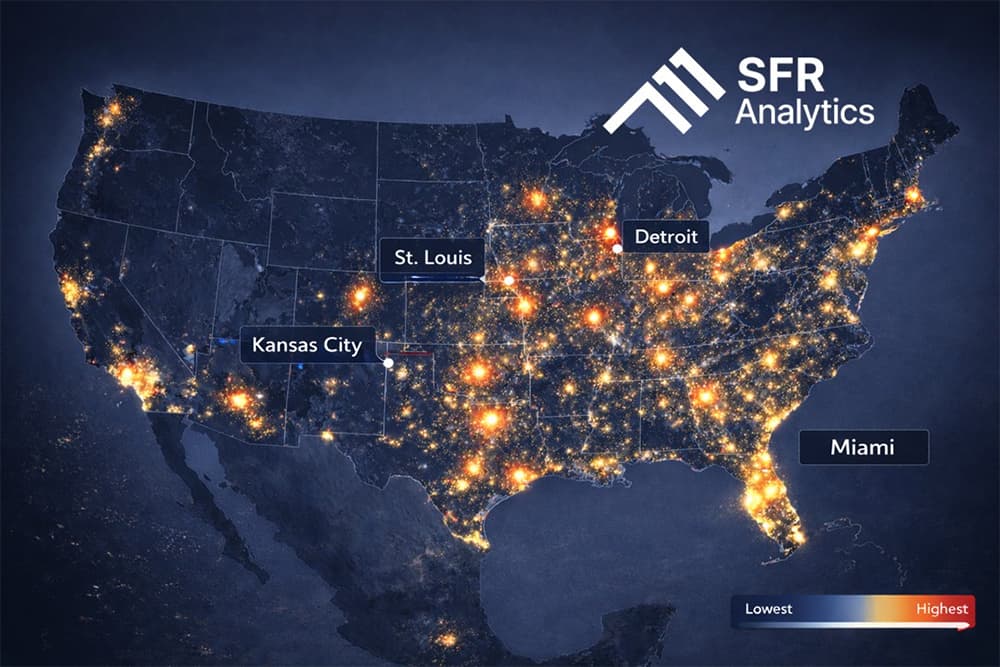
We analyzed 2025 single-family purchase data across 27,000+ ZIP codes to identify where investors are most active. Key findings:
Midwest dominates for investor concentration: St. Louis (25.0%), Kansas City (21.9%), Detroit (19.7%)
Cash remains king: Top markets see 45-60% of investor purchases made in cash
Investors are clustering in three plays: high-yield affordable markets, vacation destinations, and gentrification bets with redevelopment upside
Price band effect: 1 in 3 sub-$100K purchases go to investors; 1 in 10 at $500K+
The pattern is clear: affordable Midwest and Sun Belt markets with median values under $400K attract the highest concentration of investors. These markets still pencil for cash-flow and offer plenty of redevelopment opportunities in older housing stock.
The top investor ZIP codes reveal two distinct strategies: ultra-affordable urban cores where investors chase rental yield, and high-end resort markets where investors buy trophy properties.
St. Louis exemplifies the first strategy. North St. Louis County dominates investor activity, but which ZIP is “hottest” depends on how you measure it.
About the author
CEO & Co-Founder at SFR Analytics
Glenn Hull is the Co-Founder and CEO of SFR Analytics, where he focuses on making residential real estate data easier to use for investors and operators. Based in the San Francisco Bay Area, Glenn brings a strong background in growth and performance marketing, having previously led large-scale acquisition and analytics teams at companies such as Sundae and BuildZoom. Throughout his career, he has managed eight-figure advertising budgets, driven significant revenue growth across multiple channels, and implemented data-driven optimizations that materially improved performance. Glenn holds a degree from Claremont McKenna College and combines deep analytical expertise with hands-on experience scaling technology-enabled real estate businesses.